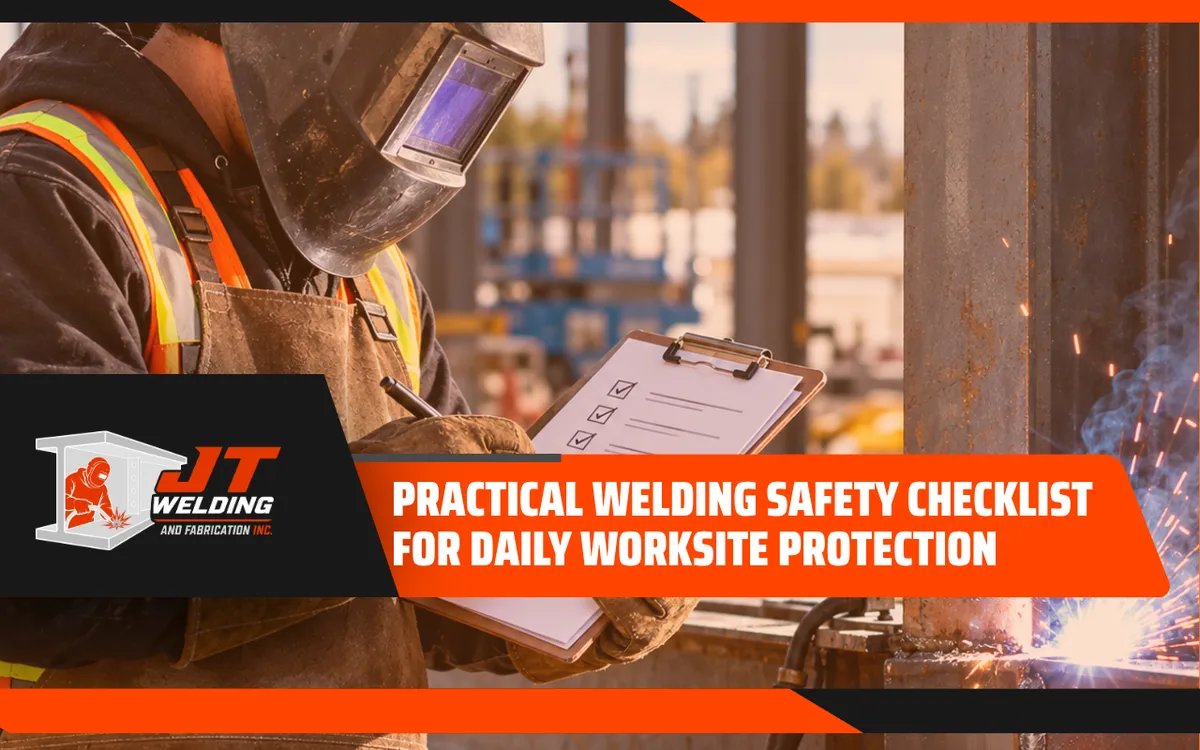
Practical Welding Safety Checklist for Daily Worksite Protection
A welding safety checklist gives our team a clear way to prepare before sparks start flying. At JT Welding and Fabrication INC, we focus on simple steps that protect people, equipment, and nearby work areas while helping every job stay organized.
Safe welding starts with good habits, the right gear, and careful planning. By following proven welding safety practices, workers can reduce common risks and complete each task with more control, confidence, and consistency.
Welding Safety Matters on Every Active Worksite
Welding can expose workers to heat, bright light, sparks, fumes, and electric shock. Because these hazards can cause serious injury, safety should guide every stage of the job. A welding safety checklist helps workers remember key steps before, during, and after welding.
At JT Welding and Fabrication INC, we treat safety as part of quality work. Careful planning can reduce delays, support better focus, and help everyone understand their role around active welding areas.
Choose Protective Gear That Fits Every Welding Task
A clear welding PPE guide should match the job and the hazards around it. Protective gear must fit well, stay in good condition, and allow the welder to move safely without feeling restricted or distracted.
Wear a welding helmet with the correct lens shade.
Use flame-resistant clothing, welding gloves, and sturdy boots.
Check eye, face, and hearing protection before work begins.
Replace damaged or worn protective equipment right away.
Control Welding Fumes With Proper Airflow Systems Daily
Good ventilation helps move welding fumes and gases away from the breathing area. Open spaces may need local exhaust fans, while enclosed areas can require stronger controls based on the materials, process, and work conditions.
Workers should never assume a space has enough clean air. As part of jobsite welding safety, check airflow before starting and stop work if fumes build up or breathing conditions become unsafe.
Reduce Fire Risks Before Striking an Arc
Sparks and hot metal can travel farther than expected, so the area around the weld must be checked first. Remove or protect materials that can burn, and make sure emergency equipment is easy to reach.
Clear paper, wood, fuel, and other flammable items nearby.
Keep the work area clean and free of loose debris.
Confirm that fire extinguishers are ready and accessible.
Watch the area after welding for hidden heat or sparks.
Prevent Electrical Hazards During Welding Operations Safely Daily
Electrical hazards can become more serious when cables, plugs, or welding machines are damaged. Inspect equipment before each use, keep connections secure, and avoid working with wet gloves, wet clothing, or standing water.
Safe welding procedures also include shutting equipment down before maintenance. At JT Welding and Fabrication INC, we encourage workers to report damaged cords, loose connections, and other electrical problems before work continues.
Follow Safe Steps Before, During, and After Welding
A welding safety checklist works best when it is part of a steady routine. Before welding, review the task, confirm the correct settings, and make sure the workpiece is stable. During the weld, keep a balanced position and stay aware of people nearby.
Secure parts with clamps instead of holding them by hand.
Keep tools arranged so walkways stay clear.
Turn equipment off when the task is complete.
Allow hot parts to cool before handling or storage.
Frequently Asked Questions
What should a welding safety checklist include?
It should cover protective gear, equipment condition, ventilation, fire risks, electrical safety, work setup, and emergency readiness. The exact steps may change based on the welding process and jobsite conditions.
How often should welding equipment be inspected?
Workers should check key equipment before use and follow a regular maintenance schedule. Cables, torches, plugs, clamps, and protective gear should be repaired or replaced when damage appears.
Why is ventilation important when welding?
Ventilation helps move fumes and gases away from the welder’s breathing area. Good airflow supports safer conditions and lowers exposure during both short and longer welding tasks.
What is the most important welding PPE?
A welding PPE guide commonly includes a helmet, gloves, flame-resistant clothing, proper footwear, and eye or hearing protection when needed. Each item should match the specific hazards of the task.
How can teams improve welding safety practices?
Teams can improve safety through regular training, clear work rules, equipment checks, and open communication. Practice also matters because workers need to know how to respond when conditions change. Short safety talks before each shift can also reinforce shared expectations and remind everyone to address hazards early.
Build Safer Welding Habits Through Daily Preparation Practices
Strong safety habits come from repeating the right steps every day. Training, equipment care, clear emergency plans, and safe welding procedures all support better decisions when work becomes busy or conditions change.
At JT Welding and Fabrication INC, we keep the welding safety checklist practical and easy to follow. That approach supports safer work, better teamwork, and a stronger focus on completing each weld with care from start to finish.